
Hong Kong is accelerating the development of its AI computing infrastructure. On October 14, the Hong Kong SAR Government told the Legislative Council that the city’s total computing capacity stands at approximately 5,000 PFLOPS. The Cyberport AI Supercomputing Centre accounts for 3,000 PFLOPS and is operating at more than 90% capacity. The San Tin? data park already under construction is expected to begin its first phase of operations in 2027 and become fully operational by or before 2032, when its planned computing capacity will reach 180,000 PFLOPS.
The high utilization of existing facilities points to strong market demand. The new data park will bring Hong Kong’s computing capacity into a much larger phase of development. According to the previously announced tender results, cumulative investment from development through the first three years of operations is expected to reach at least HK$23.8 billion.
SHINDEV believes that investment on this scale creates room for industry growth while raising three practical questions: How will new capacity operate reliably? Who will use it? And how will it generate sustainable revenue?

The pace of data center development depends on the supply of servers and chips, as well as grid connections, cooling systems and network infrastructure. Once computing equipment is deployed, power reliability and energy costs continue to affect service quality and financial performance.
These challenges extend well beyond Hong Kong. Recent research by the International Energy Agency found that global data center electricity consumption rose 17% in 2025, while consumption at AI-focused data centers grew 50%. The agency expects global data center electricity use to increase from approximately 485 TWh in 2025 to 950 TWh by 2030. Rapid changes in power demand from AI workloads also make energy storage and flexible energy management more important.
The Hong Kong SAR Government has identified “efficient computing capacity, reliable power supply and low-carbon transition” as priorities for assessing future demand and improving data center planning. For investors, power supply, equipment utilization and operating efficiency need to be considered from the project planning stage. The long-term value of computing infrastructure will depend on whether planned capacity can be turned into services delivered consistently to customers.
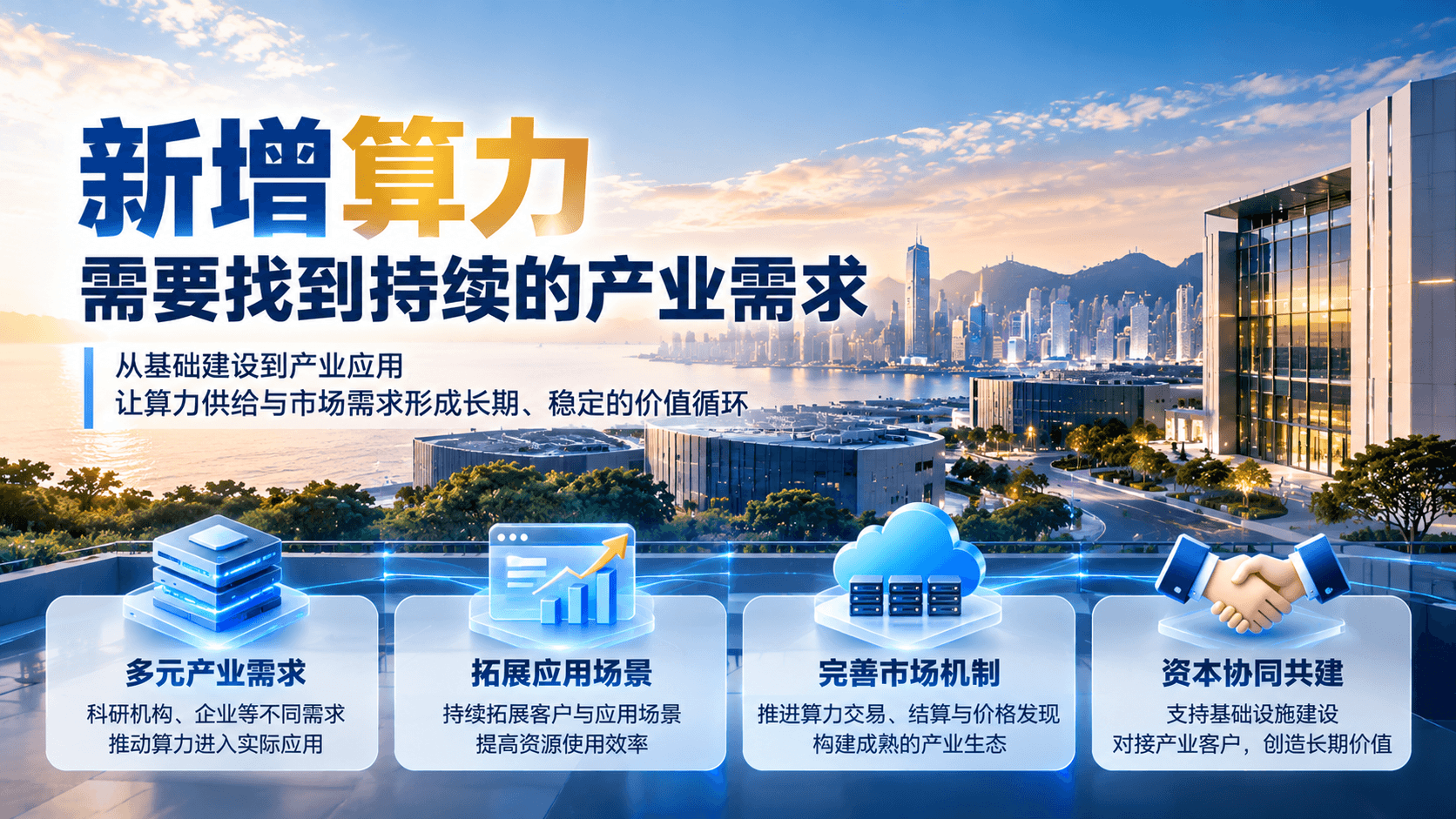
As supply expands, attention will also turn to how computing resources are used. Research institutions need capacity for model development. Businesses are more concerned with deployment speed, data security, cost control and service continuity. Meeting these different needs will test providers’ ability to allocate resources and serve customers effectively.
The Cyberport AI Supercomputing Centre’s utilization rate of more than 90% offers a clear indication of current local demand. As larger facilities enter operation, providers will still need to develop customers and use cases to keep those resources productive. For long-term computing projects, a stable customer base and a clear service model matter as much as construction scale.
In its response to the Legislative Council, the Hong Kong SAR Government also discussed longer-term possibilities such as computing resource trading. It emphasized that the immediate priority is to strengthen the underlying infrastructure. Trading, settlement and price-discovery mechanisms would require a mature market and product ecosystem.
SHINDEV sees a role for financial capital throughout this process: supporting infrastructure development, connecting technology companies with industrial customers, and evaluating projects against resource utilization, operating revenue and ongoing investment needs. As supply, service standards and customer demand become more closely aligned, the industry will be better placed to improve how computing resources are allocated.
In August 2026, SHINDEV launched a strategic cooperation in AI computing infrastructure with Huarui SmartLink and Beta Creative Tech in Hong Kong. The city’s latest development plans provide a new point of reference for the areas the company continues to study, including resource integration, industrial applications and long-term operations.
From the high utilization of existing facilities to the construction of the new data park, Hong Kong’s AI computing sector is entering a phase of capacity expansion. SHINDEV will continue to examine how infrastructure development connects with real demand, using its industry research and capital coordination capabilities to identify opportunities that can create lasting value as AI computing reaches a larger scale.