

Artificial intelligence is changing the future, while computing power is determining the future.
For a long period of time, the core resources of human economic development were allocated around land, energy, industrial capacity, transportation networks, and information technology. Land supported cities and commerce, energy drove industrial expansion, transportation improved the efficiency of resource circulation, and communications and the internet reshaped information connectivity. Every upgrade of infrastructure has changed the logic of capital pricing and reshaped a new round of industrial competition.
Today, with the rapid development of artificial intelligence, large models, smart terminals, autonomous driving, robotics, industrial intelligence, and the digital economy, the global economy is entering a new stage driven by “computing power.” Computing power is no longer merely a back-end data processing capability for technology companies. It is becoming a new type of infrastructure that supports the operation of future society, following electricity, transportation, and communications.
Capital markets are also redefining the direction of value. The core assets of the next decade will not only be companies with natural resources, manufacturing capacity, and distribution networks, but also those with computing capabilities, intelligent infrastructure, data scheduling capabilities, and digital productivity platforms. Whoever can command stronger computing power supply will be more likely to seize the initiative in industrial development in the intelligent era.
In the view of SHINDEV’s investment research team, global capital is beginning a long-term strategic deployment around computing infrastructure. From financial capital to digital capital, from traditional asset allocation to infrastructure investment in the intelligent era, computing power is becoming a new bridge connecting technology, industry, and capital.
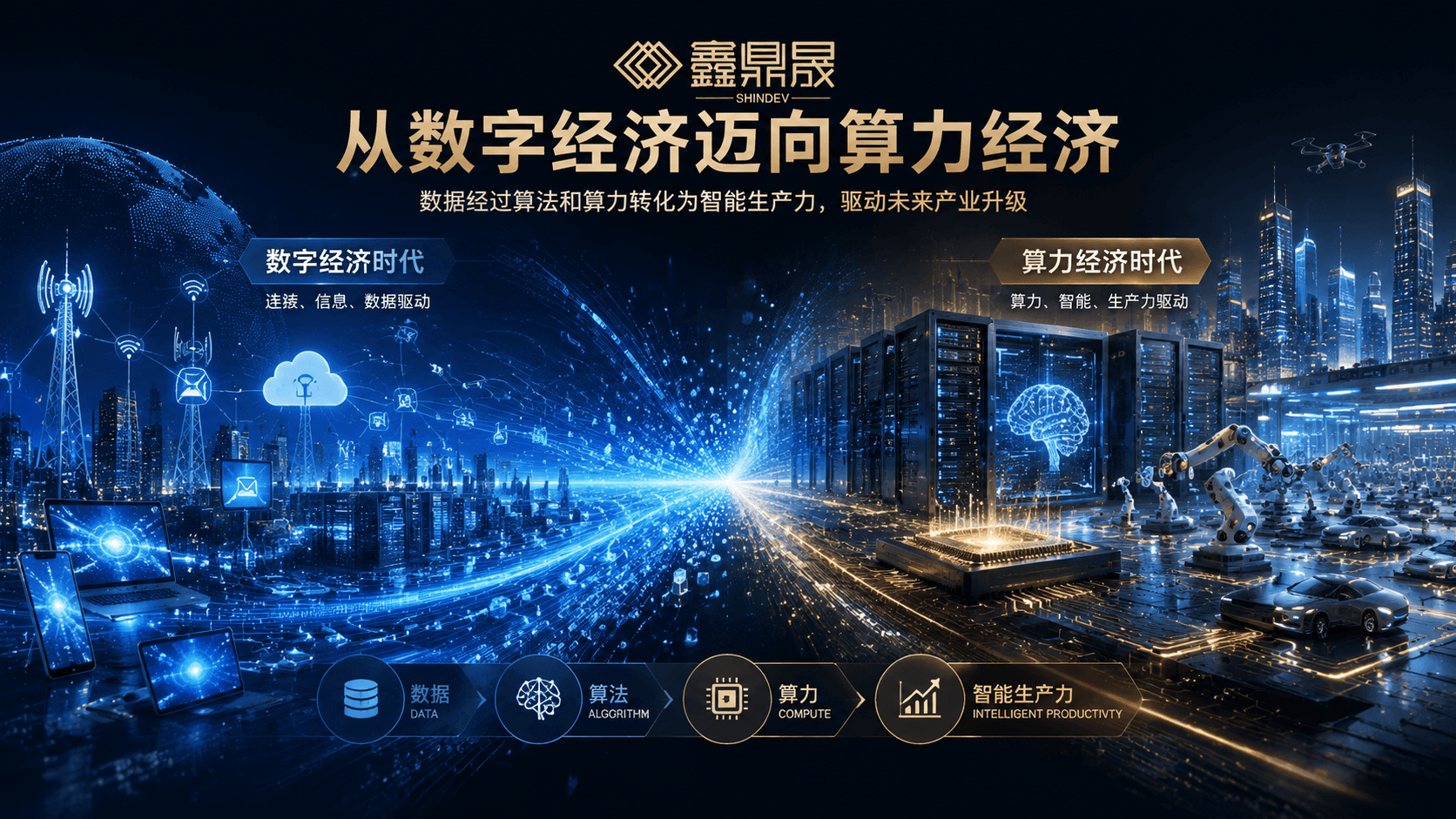
Over the past decade, the core of the digital economy was connectivity. The internet, mobile communications, cloud services, and platform economy improved the efficiency of information flow, making data an important factor of production.
After entering the AI era, however, the underlying logic of economic operations is changing further. Data does not automatically generate value on its own. Only through model training, algorithmic processing, and computing power can data be transformed into predictive capability, decision-making capability, automation capability, and production efficiency.
This means that the digital economy is moving further from “data-driven” to “computing power-driven.”
From a global market perspective, this shift is already supported by clear data. The International Energy Agency (IEA) estimates in its latest report that global data center electricity consumption will grow from around 485 TWh in 2025 to around 950 TWh by 2030, nearly doubling and accounting for about 3% of global electricity demand by 2030. Among this, electricity demand from AI-related data centers is growing even faster and is expected to reach roughly three times the current level by 2030.
McKinsey’s 2026 research also indicates that, driven by AI demand, global data center demand could grow from around 82 GW in 2025 to around 220 GW by 2030, nearly tripling. McKinsey also estimates that by 2030, global data center capital expenditure required to meet computing demand could reach USD 6.7 trillion, of which AI-related data center capex could account for around USD 5.2 trillion.
These figures show that the computing power economy is not an abstract concept. It is being translated into real investment scale and industrial demand through data centers, chips, servers, networks, electricity, cooling systems, and energy allocation.
Capital is most sensitive where it flows in advance toward future productivity.
In the traditional industrial era, capital focused on factories, mines, ports, railways, power grids, and energy assets. In the internet era, capital focused on traffic, platforms, software, and data. In the AI era, capital is moving further toward computing infrastructure.
According to Gartner’s forecast released in January 2026, global AI spending is expected to reach USD 2.53 trillion in 2026, up 44% year on year. AI infrastructure spending is expected to reach USD 1.37 trillion, making it the largest segment of AI spending. By 2027, global AI infrastructure spending is expected to rise further to USD 1.75 trillion.
At the corporate level, computing demand is already directly reflected in the performance of global technology leaders. NVIDIA’s fiscal 2026 revenue reached USD 215.9 billion, up 65% year on year. Its fourth-quarter data center revenue reached USD 62.3 billion, up 75% year on year, becoming the company’s core source of growth. Behind this is not just the growth of a single company, but the continuing global demand for high-performance computing power for AI training, inference, cloud computing, and intelligent applications.
China is also accelerating the construction of computing infrastructure. According to Xinhua, citing data from the Ministry of Industry and Information Technology, China’s intelligent computing power reached 2,185 EFLOPS by the end of June 2026, with the overall utilization rate of national computing facilities reaching 71.4%. Earlier information from the ministry also showed that China had more than 6,000 AI companies in 2025, with the core AI industry expected to exceed RMB 1.2 trillion in scale, and a RMB 60 billion national AI industry investment fund established.
Together, these figures point to a clear trend: computing power has moved from a technical resource to a foundational asset. It has both technological and infrastructure attributes. It serves not only AI companies, but also a wider range of industries, including manufacturing, finance, healthcare, energy, transportation, government services, and scientific research.
For capital, computing power is no longer merely a “cost item.” It is an important means of production in the intelligent era.
Financial capital’s deployment into the computing power industry is not about chasing a short-term theme. It is based on deeper industrial logic.
First, artificial intelligence is a long-cycle industrial revolution.
The development of large models, agents, robotics, autonomous driving, and industrial intelligence is not a short-term technology wave. It is a long-term transformation that will continue to change enterprise production methods, organizational efficiency, and industrial structures. As long as AI applications continue to expand, computing power demand will persist and rise with model complexity, inference call volume, and the depth of industry applications.
Second, computing power has clear infrastructure attributes.
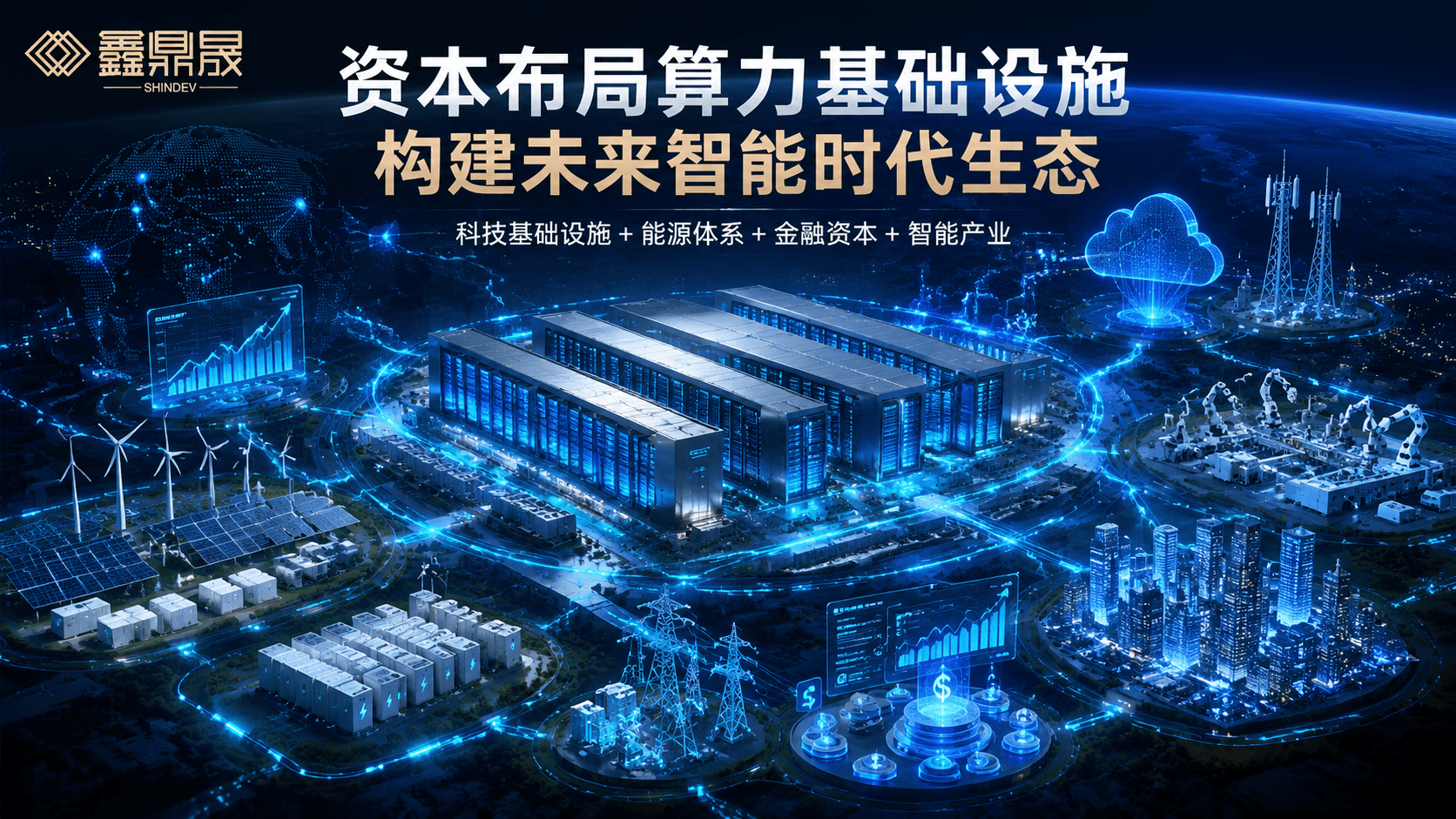
Computing infrastructure is not just a group of servers. It is composed of chips, cabinets, data centers, cloud platforms, network transmission, power systems, cooling systems, security systems, and scheduling platforms. Like electricity, communications, and transportation, it has the characteristics of long-term investment, continuous operation, scale effects, and regional deployment.
Third, computing power is becoming the shared foundation for industrial upgrading.
Manufacturing needs computing power to support industrial simulation, intelligent quality inspection, automated scheduling, and robotic collaboration. Finance needs computing power to support risk control, investment research, transaction analysis, and customer service. Healthcare needs computing power for image recognition, drug development, and assisted diagnosis. Energy needs computing power for grid dispatching, load forecasting, and new energy management.
In other words, the value of the computing power industry comes not only from AI companies themselves, but also from the long-term demand generated by intelligent upgrading across thousands of industries.
Fourth, computing power is opening new space for financial assets.
As computing resources scale up, models such as computing power leasing, computing scheduling, computing services, data center REITs, green energy support, industry funds, and project financing will continue to develop. In the future, computing power may form a more mature asset pricing and financialization pathway, similar to electricity, logistics warehousing, and communications networks.
This is why financial capital is entering the computing power industry: it represents not only a technological direction, but also future infrastructure and long-term cash-flow assets.
Capital deployment in the computing power era cannot focus only on individual projects. It must look at whether a systematic ecosystem can be formed.
The first path is investment in computing infrastructure.
This field includes AI data centers, intelligent computing centers, supercomputing centers, server clusters, high-performance chips, storage systems, network equipment, power support, and cooling systems. As demand for AI training and inference grows, computing infrastructure will become one of the most concentrated areas of global capital expenditure.
The second path is the financialization of computing power assets.
As computing resources gradually become standardized, platform-based, and schedulable, computing power will move from self-use enterprise resources toward tradable, leasable, and assessable digital foundational assets. Future financing, leasing, income-right arrangements, asset securitization, and infrastructure funds around computing resources may all become important areas of financial innovation.
The third path is industrial capital coordination.
The computing power industry naturally requires cross-industry coordination. Chip companies, cloud service providers, data center operators, power companies, telecom operators, industry application companies, and financial institutions need to form long-term partnerships. If capital only provides funding, its role is limited. Only by further participating in resource organization, industrial linkage, and business model design can it truly improve operational efficiency in the computing power industry.
The fourth path is coordination between green computing power and energy.
The growth of computing power inevitably brings growth in energy demand. IEA data has already shown that data center electricity demand will rise rapidly in the coming years. For capital, green computing power is not only an environmental issue, but also a cost issue, a compliance issue, and a long-term competitiveness issue. In the future, projects that can combine computing centers with clean energy, energy storage, grid dispatching, and efficient cooling will have greater long-term value.
Over the next decade, strategic opportunities in the computing power industry will mainly concentrate in three directions.
First is the upgrade of AI infrastructure.
Global AI applications are moving from the training stage toward large-scale inference. Compared with early model training, inference demand is more frequent, distributed, and continuous, placing higher requirements on computing scheduling, low-latency networks, edge computing, and cost control. This means that the next stage of computing infrastructure must not only be “larger,” but also more efficient, more flexible, and more sustainable.
Second is the development of green computing power.
When computing power becomes infrastructure, energy becomes a core constraint. Power access, energy costs, carbon requirements, and cooling efficiency will directly affect the long-term competitiveness of data centers and intelligent computing centers. In the future, regions with abundant green energy, sufficient land resources, stable grid conditions, and clear policy support will gain greater opportunities in computing power deployment.
Third is the industrial intelligence revolution.
Computing power must ultimately enter industries in order to create value. Computing projects with true long-term vitality will not be judged only by the number of cabinets built or chips deployed, but by whether they can serve real industry demand, form stable customer bases, and help enterprises improve efficiency, reduce costs, and create new revenue.
Therefore, competition in the computing power industry will ultimately shift from “resource competition” to “application competition” and “ecosystem competition.”
SHINDEV’s investment research team believes that global capital entering the computing power era is an inevitable result of the AI industry reaching a new stage of development.
In the past, capital was more often allocated around resources, channels, manufacturing, and internet platforms. Now, as intelligent industries accelerate, capital is searching again for the core assets of the next decade. Computing power is a key direction in this round of asset revaluation.
At the strategic level, computing power is the productivity foundation of the intelligent era. It determines whether AI can continue to train, infer, and deploy, and whether the digital economy can move from connectivity efficiency toward intelligent efficiency.
At the industrial level, computing power is not an isolated industry. It is a complex ecosystem composed of chips, servers, data centers, electricity, communications, cloud platforms, software, models, and application scenarios. Whoever can connect these links is more likely to occupy a key position in the industrial chain.
At the capital level, computing power combines growth potential with infrastructure attributes. It benefits from the high growth of the AI industry while also carrying the characteristics of long-term operation, stable services, and asset accumulation. This aligns with long-term capital’s direction of allocation toward future infrastructure assets.
Looking ahead, SHINDEV will continue to build on a global perspective and pay close attention to AI infrastructure, green computing power, digital infrastructure, industrial intelligence, and technology finance innovation. It will conduct in-depth research into long-term value opportunities across the computing power industrial chain and promote more efficient connections between financial capital, technology, industry, and digital infrastructure.
Artificial intelligence is changing the future, and computing power is determining the future.
As global industries enter a new stage of intelligent competition, the core of future competition is not only how many resources one owns, but who possesses stronger computing capability, scheduling capability, and intelligent infrastructure capability. Mastering computing power means mastering the initiative in the intelligent era. Deploying into computing power is also becoming an important strategic migration for global capital as it moves into a new century.